Monday, February 20, 2017

Urban Spelunkers

From the Office of the Vice President
Vassar College
May 1917
My fingers weave their way around torn edges and a fragile spine. Ever so slowly, I pry apart the booklet, dust spitting upwards. Fluorescent white from my phone's flashlight bleaches the page, and squinted eyes make out "Section 11: Finances". I am holding a slice of history.

This is the basement of Main Building at Vassar College. It opened its doors in 1861, and was at the time, the largest building in the United States. Once a prestigious home to classrooms, offices, and the rooms of the Vassar girls at the time, it now stands... decaying. That's not to say it isn't a sight to behold - not at all. From the moment that we drove into campus in August of 2013, it was the center of attention. Proud and graceful, like an aged philosopher. Arms by its side, a glorious bed of flowers in front of it, and filled with grand parlors, decadent halls, and cozy nooks, Main Building has a certain charisma that you can't ignore. The hallways are wide enough for a 7-aside game of gully cricket - which means that they can easily fit two simultaneous 40 over matches played at Shivaji Park.

An aerial view of Vassar's quad
Main's charm wears off quickly. The parents depart in a few days, fresh with the memory of the luscious green campus, stunning architecture, and beaming faces, but us students have to reconcile with poor plumbing, cramped quarters, and dining hall meals that, contrary to modern science, actually manage to extract any flavor the raw ingredients might have had.

Down in main basement, things have taken a turn for the worse. It's a scene straight out of a dystopian fiction, the types where nuclear bunkers are raided and left to rot. We're greeted with a fresh assortment of cobwebs with every five steps - all while daintily stepping on wobbly, makeshift floors and avoiding rusty, dangling pipes. Oh, did I mention that the ceiling caps out at 5' 8"? Makes it hard for two 6-footers to navigate, not to mention the ridicule we get from the short one accompanying us. It's ok - it's the only time she gets to make fun of us for being tall.

A welcoming sign
So we're down in the basement, which, by the way, is out of bounds for students. Not that students don't find their way down there - clearly - but security can allegedly get you in trouble for messing around there. But they have better things to do than go on a wild goose chase underneath a 150 year old building. God forbid, there could be 20 year olds drinking alcohol somewhere!

After about 20 minutes of scurrying around, ducking beneath low doorways, sliding through narrow openings, and dodging broken glass, we stumble upon a room with things in it. Boxes, crates, machines, lightbulbs... the place is a mess. My head brushes against something hanging from the ceiling, and with a yelp, I leap back.

Hello there
I sheepishly turn to look back at the disapproving faces of my friends as one of them reaches over my shoulder and pulls the string. An incandescent bulb flickers to life, illuminating the chaos around us. For a hoarder it is heaven. For a neat-freak, it is hell frozen over. I frantically begin arranging the boxes properly, shoving the antiquated machinery aside and stacking the files into appropriate crates. Once that project is done, I characteristically poke my nose into everything. There are academic records, microfilms, magazines, and contracts. We find Meryl Streep's report card for her freshman year. We find my friend's dad's academic record. We find GPAs far better than ours.

And then, I find this pamphlet.

There's nothing really remarkable about it. It's just a year-end report. Updates, finances, recaps... the usual.

But I can't put it down.

I try to put it back, but I just keep going back for it.

So I slide it in my pocket and walk out.

I'm no Bonnie and Clyde and it's not exactly an Ancient Egyptian grave robbery either. There's no thrill of the steal... not that I'm really stealing anything - how can you steal something if it isn't worth anything at all? I'm probably the most attention it's gotten in years! But then, it's forgotten again. Back into the abyss.

* * *

Weeks later, I open my drawer to pull out a folder. I dig through to find the right one, but what do I see? A small, grey booklet staring right back at me. Hmm. I cock my head and gently pick it up. I peel apart the first page and dive right in. It's either this, or homework.

"In prison, a man'll do most anything to keep his mind occupied."

College, at times, felt like a prison. All I needed was to escape it.

Within the hour, I was up-to-date on all the Vassar news... of 1917, that is. As up-to-date as an aspiring archaeologist can be. I had traveled - not far, not long - but traveled all the same. To a time where only girls attended. Where electricity bills were a bigger concern and torrenting movies wasn't an issue. Where Vassar was busy trying to figure out where to build its next building while the country, thanks to a simple telegram, was embroiled in the bloodiest war the world had ever seen.

I don't think that the 1917 report and the 2017 report are all too different. There are budgetary problems. There are buildings to take care of. The US is involved in global conflict. Professors heartbreakingly bid adieu to one batch of students while gleefully accepting the next. Times change, but people don't... or something like that.

We all say that history is just another form of stories. Some of it real, most of it fake, and the truth - well, in history, there's no such thing as truth, is there?

This booklet proved to me that we can interact with history beyond the bounds of some far-off stories. It alters our present-day experiences and interactions, even if it's only 100 years apart. In those hundred years, we saw two of the most horrific displays of brutality and bloodshed. We saw people sent to their deaths based on their race. We saw nations collapse and dissolve. But we also saw man ascend new heights - quite literally. We put a man on the moon. On the moon! We built machines that allow us to see each others' faces in realtime. We cured the deadliest diseases. We came together against acts of inhumanity to save each other.

I have a flair for the dramatic, but you have to admit - if a silly little pamphlet has the ability to break past our conceptions of history and time, what can the monuments, artifacts, and people do?

Monday, December 12, 2016

What is Dead May Never Die

Like bloodhounds picking up a scent, we humans follow death at its heels. By nature, we are attracted to the dead or dying. I don't know why we do it, but I'm guilty as well. In fact, I'd say that I'm guiltier than most. I'm a sucker for death. It's often described as a morbid fascination, but I'm not sure I agree. Death is 50% of life, isn't it? What's macabre about something so innately human?

It's no secret anthropologists go gaga over the dead. Graves, mummies, tombs - the ones that get all the attention - are only the surface. There's ritual, symbology, kinship, landscape, temporality, and on and on until you've either exhausted your academic vocabulary or completely dissected (pun intended) human social behavior.

Death goes beyond what's living though. Or at least, organically. Buildings, timelines, ideas - they die as well.

Right now, I want to talk about buildings.

I grew up thinking knowing that I was going to become an archaeologist. I surrounded myself with books on ancient civilizations, watched documentaries on excavations, and pored over volumes and volumes of National Geographic magazines. Mind you, I don't think I was processing the words to well. It was the visuals that enraptured me. Antiquated ruins, standing like behemoths over the shallow landscapes, showed off a certain side of life that is often covered up. Battered temples, crumbling castles, and rotting edifices took center stage. No, it wasn't about the largest buildings on Earth or the most luxurious houses, but quite the opposite. It was the failures of humanity. The derelict and destroyed, forgotten and abandoned. Where the arrogance of people prevailed and the fruits of their labors put to shame. What was once the epitome of progress now stood naked, its memory fragmented.

The ruins of St. Andrews Castle, Scotland
 It is death envisioned.

This past semester, I was enrolled in an environmental studies class, merging the idea of historic preservation with environmental conservation. Once a week, we would convene in a classroom to prepare for our field trip the following day, going over the site's history, importance, and overall contribution to the environment of the Hudson Valley. The class was taught by a professor of archaeology, one that I had had many times before, so I knew what to expect.

One week, we went to Denning's Point, in Beacon, NY. Once an old brick factory and depot, it now stood abandoned. For the first hour or so, we talked with some folks who were running an educational organization there - the Center for Environmental Innovation & Education. Then, we were told to go on a hike, to wander the surrounding trails and paths for another couple of hours. Basically, do whatever we want.

Naturally, our first stop was to get to the shore of the Hudson river. 28˚C it was that day (in Farenheit-nope, you can google it yourself), and what better way to start a hike than to walk for five minutes and relax? A hard earned treat, we convinced ourselves.

The banks of the Hudson River
We then split off into our self-formed groups, as it tends to happen. The long legged individuals go together, the I-love-hiking-but-I'm-especially-tired-today-even-though-we-all-know-you-never-actually-go-hiking group went their way, and the ones who missed the memo and showed up in flip-flops traipsed along, presumably to find another small beach.

Us long legged folks walked for a bit, chatting, teasing, and having a good time in general. But this isn't interesting. Nobody wants to read about someone else's conversation, and especially when it is as uneventful as the one I'm about to explain. Here's exactly, word-for-word what we discussed:

I'm kidding. It's too exciting to type in full. You'll have to ask me in person.

But a few minutes into the hike, and out from the undergrowth emerges this structure. And it's big. Like, "How does this get hidden in this tiny wooded area?", big. To my pleasure, it's absolutely gutted. The walls are broken, floors have fallen through, and it's plastered with graffiti. I'm drooling.

The factory peeks out, hidden from plain sight
Without hesitation, each of us found a point of entry and slipped in. I found a broken window just at ground level, and not known for being the widest human being on earth, managed to slither in without a hitch, aside from a nice dusting of cobwebs. I was quite proud of myself for cleverly finding that little spot, until a friend sauntered through a wide open doorway that some previous urban explorers had nicely cleaned up. Hmph. Mine was more thrilling anyway.

I don't want to give away everything we saw, but we spent nearly an hour exploring this building. All of us were enraptured by it. Swallowed by creepers and rogue branches, bruised by age and weather, and "vandalized" by some teenagers, it was a thing of beauty.

Vandalized. Yes, technically, it was vandalized. Broken glass, paint, graffiti... it's illegal, isn't it? But what would this building be without it? Just another stupid, neglected, useless old building that has no purpose. Too much money to maintain, too much to destroy. In other words, dead.

The layers and layers of spray paint proved something to us. This building, on its last legs, tilting, buckling, was far from dead. Death is characterized by what's forgotten. The old brick factory, with all its missing machines, rusty pipes, and broken windows, is no longer a brick factory. Today, it is more alive than ever. If a building, hidden in the woods, away from civilization, lacking any electricity or WiFi can attract the attention of so many children and adults alike, how on Earth can we call it dead?

Man and nature blend seamlessly
It wasn't just alive - it was creating memories. Ripping and sewing together time. Repurposing the past for the future.

The only things that are truly dead are the ones that have no memory. The names, places, and things that once buried, never resurfaced. Those that aren't even in our current scope of reality. Dead buildings, however... they don't exist. No building can truly die until it is forgotten. Think about it - every house you ever lived in, every school you walked into, every bathroom you pissed in - is alive somewhere. And it's not dying any time soon.

Wednesday, June 1, 2016

Ticket to Nationality

“If it’s treason ye’r in for, then may God bless yer soul. First, ye shall be hanged by the neck - but not til’ death! No, noooo. That is much too generous for committing this treachery. The noose shall be wound around yer neck until the peachy white of yer cheeks flush with blue. And then, as the light starts t’ fade and yer eyes roll into yer skull, I sever the rope and bring ye back t’ yer wits.”

The audience didn’t move an inch.

“As ye lay on the ground, gasping for breath, I grasp me axe and chop off yer privates. With my sharp, shiny sickle, I tear yer skin apart, detach yer vital organs, and set them alight right before yer eyes!”

Gasps echoed.

“And after yer corpse has been quartered and yer parts scattered across the land, only then, ONLY THEN will you be sent to the depths of hell. That, good folk, is why ye shall never, ever, sell yer soul to the enemy.”


Traitors, beware!
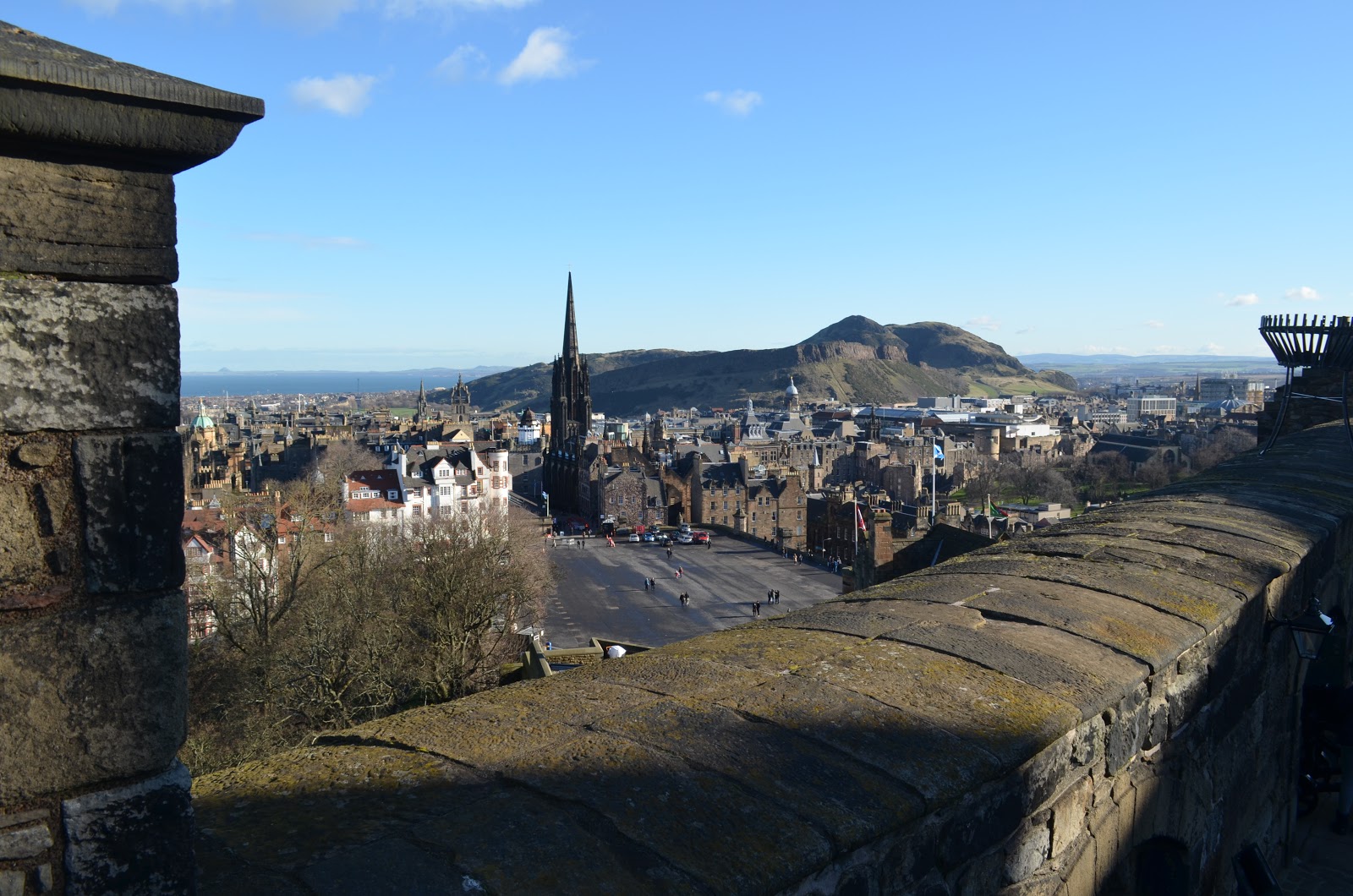
In Edinburgh Castle, a fortress that had stood for centuries, children, parents, and the elderly gave a standing ovation to an actor who had just grotesquely described one of the most brutal forms of execution. Unlike most history classes where each sentence goes in one ear and out the other, this particular pleasant lesson was etched into everyone’s minds. All it took was a simple costume, a few lines of dialogue, and an audience.

The Scots understand how to market history. India, a land that has been occupied since time began, filled with hordes of undiscovered treasures, monuments that make man feel insignificant, and culture so interwoven and rich, can only achieve a fraction of this.

Scotland is astounding. There is no denying it at all. Rolling emerald hills, sapphire seas, and breathtaking vistas are plentiful, and even a short bus ride from one town to another will expose you to its raw beauty. For such a small country, it packs a real punch.

Edinburgh is an stunning combination of old and new, manmade and natural
Pass through any village, and no matter the size, you'll find a few signs pointing to some historic landmark. Back home, we reserve these for only the most important of monuments. Here, a little blue sign directs you to a tiny, seemingly insignificant structure. Some house that an old fogey lived in, or a mill that has been around since 1645. The cornerstone that Robert the Bruce urinated on when his carriage was passing through, or the exact location where William Wallace's pet cat was born. Who cares? one might think.

It's all about identity, though, isn't it? Yeah, maybe your stupid little town only has one grocery store, an antique taxidermy dealership, a postman who is hard of hearing, and a telephone booth that still uses a rotary dial. But what if that town can be connected to something larger than itself? What if your town, a nothing name with nothing people who do nothing, can relate to something?

It makes you feel important. It connects you to the land. I didn't care one bit about Bangalore for many years. It was just another city to me, where I went to school, did my work, came back home, ate food, and slept. Another place where Dushyant existed independently of Bangalore.

But then, I started learning more about it. Discovering the stories it had to offer. One of the oldest substations in India. A village that set the path for the biggest technological advancements in history. An aerospace industry, dating back to the 18th century, that revolutionized space travel. Suddenly, I was a Bangalorean. No more was this 11 million strong city a blip on the map. It became a part of me, and I a part of it. I was proud to write, "Dushyant Naresh, age 16, Bangalore".

India makes it hard for you to love her. It's a wonderful country, but a self-destroying one. Our people have done so much for the world, to the point where without some of these contributions, life would not exist anything like it does today. However, India tries to make you forget about these things. It makes you remember the poverty, the filth, the corruption. The castes, the disparity, the privilege. In some ways, it's a good thing. It makes you face the problems, not hidden behind grey walls like in Beijing.

Scotland is a mirror image. She reminds you that this country of five million, tucked away in some remote corner of the Earth, its only contribution being the riveting, edge-of-your-seat sport of golf, is strong. She tells you- no, she convinces you that to be Scottish is to be Great. Whether you're a bartender in Pittenweem or a financial executive in Glasgow, you are connected to the land, the land of the proud, strong, and brave.


The view from Wallace Monument, a national symbol of pride
Edinburgh Castle is just a building. An old building, I must say. Its walls have felt centuries of change, witnessed the bloodiest battles, been privy to the most scandalous information, crowned the most glorious kings. At face value, it is just another line in the history books.

But you start to weave a narrative, and things change. No longer was I walking through an empty hall where kings and queens once feasted, jesters played, and trumpets blared. The location - a two dimensional set of coordinates - was transformed into a memory. I was watching an engrossing tale of treason, torture, and fear. I was standing there, aching legs, heavy camera, and frozen fingers, immobile, as a stranger transported me to another era. Edinburgh Castle, from that moment onwards, was not another castle struck off my bucket list - it had become a living memory, breaking the boundaries of space-time, hitching me to this land they call Scotland.

In that second, I was Scottish.

Wednesday, July 15, 2015

The Sirens

Eyelids slowly wilt as the soothing hum of the car engine lulls me to sleep. The rising sun casts a golden glow across the endless landscape, with subtle magentas, yellows, and blues fusing together the feathery clouds. Desert grasses and prickly pear cacti blanket the soil, stretching into the distance as far as the eye can see. Idle cows and restless horses dot the countryside, and with The Joshua Tree softly playing in my ears, it feels like heaven.

Sunset in the desert
Yet don’t be fooled by this paradise—by 9:00 a.m., the furious sun scorches anything in its wake. Sizzling temperatures and sandy gusts of wind cause severe dehydration, and it doesn’t help that nearly everything around you is out to destroy you. Dead mesquite branches have a wonderful tendency to find their way through the soles of shoes, prickly pears wind their way into socks, and gravely, sandy soil ensures that the graceless ones among us are constantly wary of our steps. During the day, rattlesnakes and centipedes roam the desert surface like kings, and the same areas transform into the hunting grounds for the coyotes and bobcats at night.

The desert hosts a variety of landforms
This raises the question—why did people settle here? As we continue excavating at the Dinwiddie site, we are getting a firsthand view of how the people who lived in this region before us interacted with the immediate landscape. People made their walls and floors with adobe, a cement-like combination of materials extracted from the ground. They sculpted comals, metates, and manos out of large stones through hours and hours of grinding and pecking. Projectile points flaked out of local Mule Creek obsidian and bone awls and scrapers are scattered throughout our excavation units. Prickly pears produce a delicious fruit, and their pads, de-thorned and cooked, are like green beans. Agave nectar is a natural sweetener, contrasting the savory meats of rabbit, deer, and other wildlife. The Southwest, therefore, stands as a prime example of the resourcefulness and ingenuity of humanity.

Ultimately, there is a certain misconception of the desert. The harsh, arid climate complements the stunning beauty of the landscape. It isn’t just a drab, sandy stretch of land that houses rolling tumbleweeds and tough men galloping on horses. Instead, it is a remarkable feat of nature—dynamic skies, resilient fauna, and hardened creatures inhabiting the landscape. The people who resided in these lands managed to harness the staggering power of the desert to its fullest, stamping their mark into the dirt for centuries. And some teenage rascal from Bangalore is privileged enough to be able to relive some of the experiences that these people had, interacting with the gorgeous landscape just like they did.

Field school students learning tool-making techniques used by the people who lived in this area in the past

Written as part of the Archaeology Southwest Field School 2015 - link here

Sunday, January 4, 2015

The Silent Cartographer

A few months back, I was assigned a project to analyze a few maps from a city of choice and come to some conclusions. Naturally, I chose Bangalore because apart from it being the city I was most familiar with, I was positive that there were so few maps of it online, appealing to the hereditary laziness in me. After a frustrating few hours of perusing the deepest depths of the internet, I managed to pick out a few maps from different time periods, each with fairly credible sources.

Alright, now all I have to do is look at the legends, make some vague connections between them, and I'm good to go. Those little green puffs in the 1791 map? Trees, or something. Hey, look! Those green things are gone in the Google Maps version - boom. Urbanization causes deforestation. Blame it on colonialism.

Uhh... those large roads in the center of the city? Now they are the major arteries of the cities, with smaller capillaries branching out into a million different households. Population influx, growth of IT, easy! Again, let me just blame that on colonialism.

This is pretty easy! It's just like a vague connect-the-dots puzzle, but one that traverses space and time. Let's move on to the next-

Hold on. What is that? Is that... the fort? Bangalore Fort? The whole map of Bangalore is simply "Bangalore Fort" in the 1791 version, but in 1914 it's just this tiny little oval perched on the left side of the page. It's not even present in the 1956 map! And the center of Bangalore in Google Maps is far off from Bangalore Fort. Now, it gets interesting. I need to dig deeper, figure out why the most prominent and arguably only element in the city is minimized to this tiny, insignificant dot. Let's analyze the map data with relation to the Bangalorean and - on a larger scale - Indian timeline.

1791: Bangalore is a British establishment, maintained and run by the army. The fort, captured earlier that year, has been taken from the hands of Tipu Sultan, the King of Mysore. Killed in battle, his legacy is being written off by the foreigners just like they did to countless people, victims, and stories before, across every continent. Bengaluru is changed to Bangalore, and words such as "cantonment" and "park" are being introduced into the lexicon. All traces of India are being wiped away, replaced with the crimson cross and the promise of democracy.

Bangalore Fort, 1791
Earl Cornwallis

1914: Unbeknownst to much of the outside world, India has been in revolution for decades. Riots have been extinguished as quickly as a candle, but underground armies refuse to back down. Violence is only one means of revolt - the effective protesters are the ones we never see or hear because they've penetrated the defenses so subtly that even the British have no idea what has struck them. The silent cartographer, in a constant war with history, attempts to reverse the damage that the invaders have done. Bangalore as a city has expanded, but in reality, the focus of the city still surrounds the walls of the fort. The silent cartographer sees this, and slowly, measuredly draws the attention away. First, the structure becomes smaller - because it's all relative. The size of the paper stays the same, the size of the fort stays the same, but the size of the city grows; the building that was 1/3rd of the page is now 1/6th. Then, he ever so slightly changes the perspective: each year, the fort moves half a square to the left. Just enough to be noticeable, not enough to arouse suspicion. Who bothers studying maps, anyway?

Bangalore, 1914
Verlag von Karl Baedeker

1956: Freedom. The British are gone from our lives, never to return. Gandhi was just the end - the last straw on the camel's back. Plans have been in motion for nearly a century, and it shows: Bangalore Fort? Vanished. Mirrors and smoke. Just like that, it's gone.

Bangalore, 1956
Satyaprakash & Co.

How does it matter? Just because the fort is gone from the map, doesn't mean it has actually vanished. Like the Pyramids of Giza, the Taj Mahal, and the Great Wall of China, it too has stood the test of time. History can't be overwritten if the physical structure still remains! Unfortunately for the colonists, it can. Ask any Bangalorean the directions to the fort, and nine times out of ten you'll get the response, "What fort?". Gothilla, saar.

The systematic process of colonization was the driving force behind the erasure of culture and context from the world. It devastated millions of lives, dehumanized the rest, and injected countries with enough large-scale problems to last centuries. Yes, it was terrible. But it is equally important to acknowledge those that quietly, subtly stood up to it. They were the ones who managed to start the process of decolonization while colonization was still happening, right under the noses of the British.

What started off as a pretty mundane project turned out to be arguably the most captivating work I've done so far. I was reading literature I had never in a thousand years imagined I would pick up. The homework had turned into a game - I was playing the detective and the clues were scattered across time. While this is neither groundbreaking, phenomenal, or even close to admirable, the passion I felt completing it is something I haven't felt for years. High school had almost completely dissolved any interest I felt towards history and archaeology, and I'm extremely glad to be out of there. I think my fascination with archaeology is not the artifacts, the mummies, the buildings - it's the prospect that I can play a time-traveling Sherlock Holmes who isn't afraid to pick up a shovel just to find some answers.